

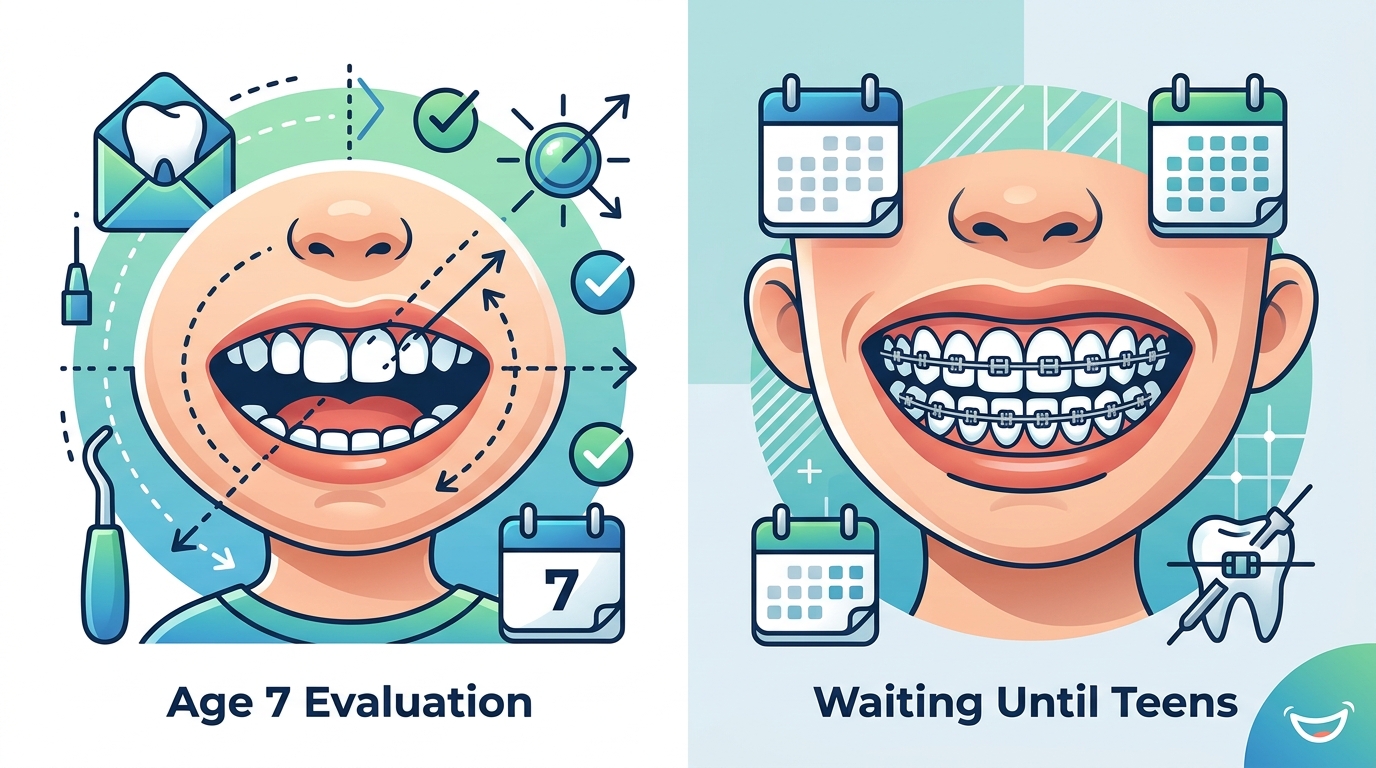
For most children, the American Association of Orthodontists recommends an initial orthodontic evaluation by age seven. This early assessment allows specialists to identify jaw growth issues and tooth alignment problems while the child is still growing. Waiting until the teenage years may be suitable for some, but it often limits treatment options. At Smileland Pediatric Dentistry, we help families decide the right timing based on individual growth patterns and dental development.
The Case for Evaluation at Age Seven
Age seven is a critical window in dental development. By this time, most children have lost their first four baby molars and have their first permanent molars in place. This stage offers a clear view of the relationship between the upper and lower jaws. An orthodontic evaluation at this age is not always a prescription for immediate braces. Instead, it is a diagnostic tool. The orthodontist assesses jaw growth, tooth eruption, and bite alignment to determine if intervention is needed now or if monitoring is sufficient.
Why Early Detection Matters
Early evaluation can identify hidden problems that are not yet visible. For example, a child may appear to have a normal smile, but underlying jaw discrepancies could lead to severe crowding or bite issues later. Identifying these issues early allows the orthodontist to guide jaw growth. This approach, often called interceptive orthodontics, can simplify or even eliminate the need for more complex treatment in the future. It is a proactive strategy that leverages the child's natural growth potential.
Limitations of Early Evaluation
While beneficial, early evaluation does not guarantee that treatment will be simple. Some conditions require waiting for all baby teeth to fall out. Additionally, not every child needs treatment at age seven. Many children are simply monitored. This monitoring phase requires regular checkups, which adds to the family's schedule. However, the long-term benefits of catching issues early often outweigh the short-term inconvenience of additional visits.
The Case for Waiting Until the Teenage Years
Some families choose to wait until their child is a teenager, typically between ages 11 and 14, for their first orthodontic consultation. This approach is often driven by the desire to avoid early treatment or the belief that braces are only for cosmetic fixes. By this age, most baby teeth have been replaced by permanent teeth. This makes it easier to assess the full set of teeth and plan comprehensive treatment.
Advantages of Later Evaluation
Waiting until the teenage years can be appropriate for children with mild alignment issues. If the jaw relationship is normal and only minor tooth crowding is present, waiting may be a viable option. Teenagers are often more cooperative with orthodontic appliances, such as braces or clear aligners. They understand the importance of oral hygiene and are more likely to follow instructions. This can lead to a smoother treatment experience. However, this approach assumes that no significant jaw growth issues are present.
Risks of Delaying Evaluation
The primary risk of waiting is missing the window for growth modification. Once the jaw has fully grown, certain bite problems cannot be corrected without surgery. For example, a severe underbite or overbite may require orthognathic surgery if not addressed during growth. Waiting also means that any existing crowding or spacing issues will progress. This can lead to more complex and longer treatment times. In some cases, teeth may need to be extracted to create space, which would not have been necessary with early intervention. according to Case Study Safety
Comparison of Evaluation Timings
| Criteria | Age 7 Evaluation | Teenage Evaluation (11-14) |
|---|---|---|
| Primary Goal | Monitor growth and intercept issues | Comprehensive alignment of permanent teeth |
| Jaw Growth Modification | High potential for non-surgical correction | Limited; surgery may be required for severe cases |
| Treatment Complexity | Often simpler or shorter if issues are caught early | May be more complex if issues have progressed |
| Child Cooperation | May require patience and guidance | Generally higher cooperation and hygiene compliance |
| Monitoring Frequency | Regular checkups required until treatment starts | Less frequent until active treatment begins |
Choosing the Right Timing for Your Child
Deciding when to schedule an orthodontic evaluation depends on your child's specific dental and skeletal development. There is no one-size-fits-all answer, but certain factors can guide your decision.
Choose Age Seven Evaluation If:
- Your child has a family history of jaw issues or severe crowding.
- You notice your child has difficulty chewing or breathing through their mouth.
- Your child has lost baby teeth early or is losing them in an unusual order.
- You want to maximize the potential for non-surgical correction of bite problems.
Choose Teenage Evaluation If:
- Your child has a normal jaw relationship and only mild tooth alignment issues.
- Your child is highly cooperative and committed to oral hygiene.
- You prefer to wait until all permanent teeth are present for a full assessment.
- Early evaluations have shown no significant growth concerns.
At Smileland, our orthodontists provide personalized recommendations based on a thorough clinical examination. We take the time to explain the pros and cons of each option, ensuring you make an informed decision that aligns with your child's needs and your family's preferences.
Frequently Asked Questions
What happens during a first orthodontic evaluation?
The evaluation typically includes a visual exam, digital X-rays, and a review of your child's dental history. The orthodontist assesses jaw growth, tooth eruption, and bite alignment. No treatment is performed during this initial visit. The goal is to gather information and provide a recommendation.
Does an evaluation at age seven mean my child needs braces immediately?
No. Most children who are evaluated at age seven do not start treatment immediately. The evaluation is a diagnostic tool. The orthodontist may recommend monitoring, interceptive treatment, or waiting for more permanent teeth to erupt. Immediate braces are only recommended if specific conditions require early intervention.
Can I switch from monitoring to active treatment later?
Yes. If your child is being monitored, you can switch to active treatment at any time. However, the timing of the switch depends on the specific dental issues present. Starting treatment earlier may simplify the process, while waiting may require more complex procedures.
What if my child is older than seven and has never had an evaluation?
It is never too late to get an orthodontic evaluation. While the window for growth modification may be closing, many issues can still be corrected. An evaluation will help determine the best course of action based on your child's current development.
How much does an orthodontic evaluation cost?
Costs vary by location and insurance coverage. Many insurance plans cover a portion of the evaluation fee. We recommend contacting your insurance provider to confirm your benefits. Our office can also provide a detailed estimate after the evaluation.
Schedule Your Child's Evaluation
Choosing the right time for an orthodontic evaluation is a significant decision for your child's long-term oral health. By understanding the benefits of early assessment and the risks of delay, you can make an informed choice. At Smileland Pediatric Dentistry, we are committed to providing compassionate, expert care for your child's smile. Whether you are considering an evaluation at age seven or waiting until the teenage years, our team is here to guide you through the process. Book an appointment today to discuss your child's unique needs.